Two new practical guides will help Supreme Audit Institutions build stronger quality management systems and embed a culture of continuous improvement.
Quality is at the heart of credible public sector auditing. It underpins the confidence that legislatures, citizens and other stakeholders place in the work of Supreme Audit Institutions (SAIs). But ensuring consistent audit quality requires more than reviewing completed audit files. It calls for strong leadership, shared responsibility and systems that identify and address risks before they affect audit outcomes.
With the revised ISSAI 140 introducing a fundamental shift from traditional quality control towards a proactive, risk-based approach to quality management, SAIs are being challenged to rethink how quality is embedded across their institutions.
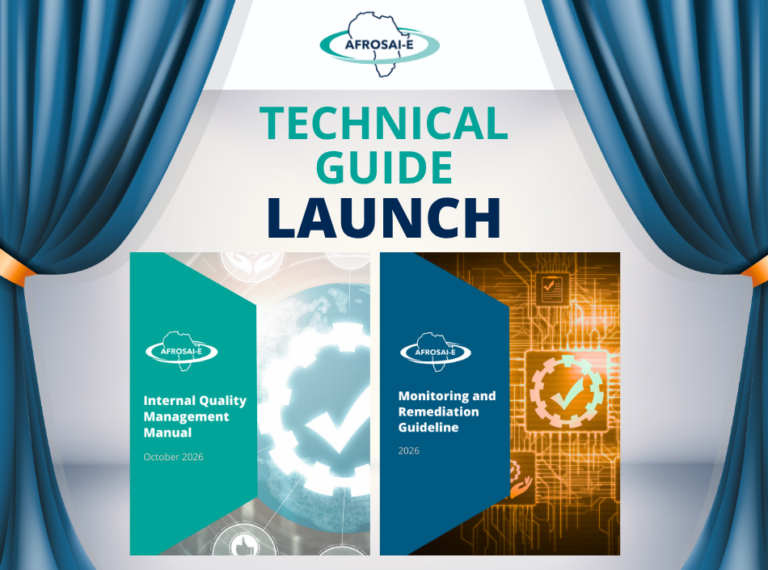
To support this transition, AFROSAI-E has launched two important resources: the Internal Quality Management Manual (2026) and the Monitoring and Remediation Guideline (2026).
Together, these publications provide practical guidance to help SAIs strengthen their systems of quality management, monitor their effectiveness and build a culture where learning and improvement become part of everyday practice.
Building quality into the way SAIs work
The Internal Quality Management Manual guides SAIs through the process of designing, implementing and operating a system of quality management aligned with ISSAI 140.
It provides practical steps for establishing quality objectives, identifying and assessing risks, developing appropriate responses, assigning responsibilities and evaluating whether the system is working effectively.
Importantly, the Manual recognises that every SAI operates in a different environment. Rather than prescribing a single approach, it encourages institutions to develop systems that reflect their own mandates, resources, capabilities and circumstances.
The Manual also draws on AFROSAI-E’s Institutional Capacity Building Framework (ICBF), helping SAIs connect quality management with their broader institutional development priorities.
Turning monitoring into meaningful improvement
The accompanying Monitoring and Remediation Guideline focuses on an equally important question: once a quality management system is established, how can SAIs know whether it is working — and what should they do when weaknesses are identified?
The Guideline takes SAIs through the practical process of planning and conducting quality monitoring activities, reviewing individual audit engagements and assessing the quality management system as a whole.
It places particular emphasis on identifying the root causes of deficiencies, developing appropriate remedial actions and following up to determine whether those actions have been effective.
This approach encourages SAIs to look beyond correcting individual shortcomings and instead address the underlying issues that may affect audit quality across the institution.
A shared commitment to stronger public auditing
The revised ISSAI 140 makes clear that quality management is not the responsibility of a single department or quality assurance team. It is an institution-wide commitment, supported by leadership and reflected in the decisions and actions of people at every level.
The two new AFROSAI-E publications are designed to support this collective responsibility, helping SAI leaders, managers, auditors and quality management practitioners translate the requirements of the standard into practical action.
While the guidance must be adapted to each institution’s circumstances, it provides a valuable starting point for strengthening existing practices and developing more effective, sustainable systems.
Ultimately, effective quality management is about more than meeting professional standards. It is about enabling SAIs to consistently deliver credible, high-quality audits that strengthen accountability and public trust.
Explore the new Internal Quality Management Manual and Monitoring and Remediation Guideline.