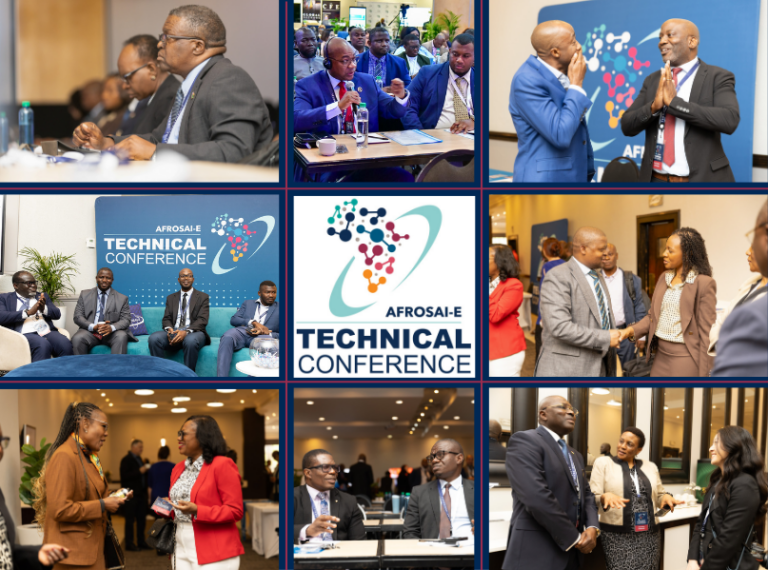
From 3 to 6 February 2025, AFROSAI-E participated in the annual African Mining Indaba held in Cape Town. The Indaba is a premier gathering of industry leaders, policymakers, investors, and stakeholders, providing a crucial platform for discussing emerging trends, success stories and challenges in Africa’s mining industries. Our attendance enables us to gather insights that inform our extractive industries’ capacity-building initiatives, empowering Supreme Audit Institutions (SAIs) in our region to conduct high-impact audits that drive transparency, accountability, and value creation in the sector.
This year’s Indaba was held under the theme ‘Future-proofing African Mining Today’, with a strong emphasis on ensuring that mining benefits communities and fosters sustainable economic growth. A key highlight of the event was the session “Future-Proofing African Mining Today – Uncovering the Top 5 Elements for Success”, which explored how dreams of streamlined downstream value addition can be turned into reality. The discussion covered the combined roles of governments, investors, indigenous communities, technology adopters, and managed risk in future-proofing mining in Africa. This session set the stage for the various workshop discussions throughout the Indaba.
Key takeaways from the discussions that are particularly relevant for our region include:
- Maximising Critical Minerals
The global demand for critical minerals, such as lithium, cobalt, and rare earth elements, is surging due to their essential role in renewable energy technologies and digital transformation. The workshop “Critical for Who – How Producers Can Flip the Script on Critical Minerals” emphasised that Africa can maximise its critical minerals by fostering local beneficiation, developing renewable energy industries, and leveraging regional collaboration to negotiate fair trade terms.
Key considerations for SAIs:
- Assessing the governance frameworks around critical mineral extraction, including licensing, contracts, and revenue collection.
- Evaluating the effectiveness of policies aimed at local beneficiation and value addition.
- Ensuring transparency in agreements between governments and international investors to prevent resource mismanagement.
- Sustainable Mining Practices
Sustainability remains a top priority for the mining sector, with increasing pressure on companies to adopt environmentally responsible practices. The “Sustainability Series” of workshops explored whether mining companies are being honest in reporting their ESG and sustainability impact, the challenges of corruption in mining, and the impact of mine closures on communities.
Key considerations for SAIs:
- Conducting audits on environmental compliance and the effectiveness of rehabilitation programmes.

- Reviewing the enforcement of environmental regulations and assessing the penalties for non-compliance.
- Promoting accountability in corporate social responsibility (CSR) initiatives linked to sustainability.
- Prioritising Health and Safety
Worker safety and community health are integral to responsible mining. The workshop “Prioritising Health and Safety: Mining and Zero Harm” stimulated an open discussion about mining health and safety challenges, how the industry can maintain a right to operate, and how new technologies can help sustainably reduce accidents.
Key considerations for SAIs:
- Evaluating the effectiveness of workplace safety regulations and enforcement mechanisms.
- Reviewing the implementation of health programmes for mining communities, including access to healthcare and disease prevention.
- Ensuring mining companies allocate sufficient resources to worker safety measures and risk management strategies.
- Future-proofing Communities
Mining communities should be the primary beneficiaries of extractive activities. The session “Future-Proofing Communities” brought together stakeholders to discuss strategies for ensuring communities continue thriving beyond mining activities.
Key considerations for SAIs:
- Auditing the allocation and utilisation of mining royalties and community development funds.
- Evaluating the long-term socio-economic impact of mining projects on local communities.
- Promoting transparency in revenue-sharing mechanisms to prevent corruption and mismanagement.
- Country Showcase: Zambia’s Sustainable Mining Vision
A standout session at the Indaba was the Zambia Country Showcase under the theme “Producing Today and Transforming Tomorrow”. Zambia emphasised its commitment to sustainable mining by integrating environmental and community-focused policies into its future mining plans. This session highlighted Zambia’s approach to future-proofing, balancing resource extraction with long-term socio-economic and environmental considerations.
Moving Forward

The insights gained from the 2025 African Mining Indaba will inform AFROSAI-E’s ongoing efforts to support SAIs in strengthening oversight of the extractive industries. By ensuring that mining activities are conducted transparently, sustainably, and equitably, SAIs play a pivotal role in safeguarding public resources and enhancing the well-being of communities across Africa.
We look forward to engaging with our members and partners to integrate these key takeaways into audit practices that drive positive change in the extractive sector.