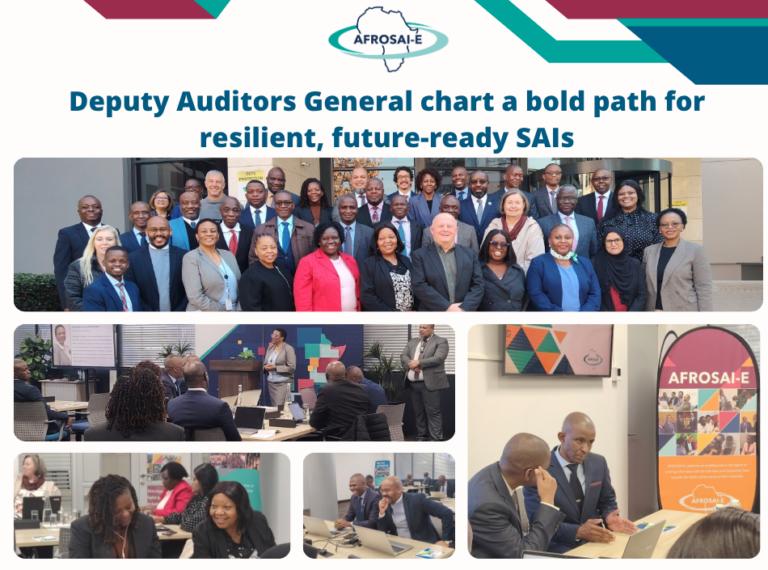
Lusaka, Zambia: 27–30 April 2026
The final workshop in a series of interventions supporting Supreme Audit Institutions (SAIs) auditing SAP‑based Integrated Financial Management Information Systems (IFMIS) is taking place in Lusaka, Zambia, this week.
The workshop brings together Financial and Information Systems (IS) auditors from the SAIs of Malawi, Zambia and Zimbabwe. Participants are experienced auditors who play key roles in auditing IFMIS within their respective institutions.
This intervention, funded by the South African Department of International Relations and Cooperation (DIRCO), seeks to strengthen IFMIS audit capacity across the region by increasing:
- The cumulative number of SAIs conducting annual IFMIS audits.
- The number of SAIs auditing more than 75% of critical systems.
- The number of SAIs issuing audit reports in line with ISSAI standards.
The previous activities in this programme included a benchmarking workshop held in Harare, Zimbabwe (18–21 August 2025) and SAP audit and cybersecurity training conducted in Lilongwe, Malawi (1–5 December 2025).
The Lusaka workshop marks a key milestone as the final follow-up engagement, providing an opportunity to review, reinforce, and consolidate IFMIS audit practices across participating SAIs. It aims to promote a more unified and coordinated audit approach, aligned with INTOSAI principles, particularly INTOSAI-P12, while strengthening the role of SAIs in enhancing accountability, transparency, and integrity in the management of public resources through improved audit practices.
Dr Ron Mwambwa, the Auditor General of Zambia, officially opened the workshop. In his opening remarks, the AG emphasised the importance of the workshop in strengthening the capacity ofSAIs to audit IFMIS effectively. He highlighted the challenges of auditing in complex SAP-based environments and stressed the value of collaborative knowledge sharing, benchmarking best practices, and peer learning while acknowledging IFMIS as a critical national asset that supports government expenditure management.
The workshop provides an opportunity to consolidate lessons learned and highlight emerging good practices from previous interventions. Participants are reflecting on key insights that informed the development of practical guidance for SAP-based IFMIS audits across IS Audit and Financial Audit (FA) and are identifying common audit findings to support broader knowledge sharing among SAIs.
A key component of the programme is assessing progress made to date. This includes reviewing how participating SAIs have applied agreed methodologies and security audit techniques, while also identifying remaining gaps in skills, approaches, and resource allocation that may impact effective implementation.
To address these gaps, the workshop places strong emphasis on strengthening capacity in priority IFMIS (SAP) audit areas through targeted, hands-on training, enabling participants to deepen their practical skills and confidence.
The workshop further aims to enhance IFMIS audit and reporting mechanisms. Discussions are centred on improving the quality and consistency of audit reporting, strengthening collaboration between ISA and FA units, refining audit templates and communication processes, and promoting minimum standardised procedures for SAP-based IFMIS audits.
Looking ahead, the workshop will conclude with a forward-looking session to define next steps. Participants will have the opportunity to identify actions to sustain and accelerate progress, outline longer-term capacity development priorities for 2026–2027, including peer learning and refresher programmes, and explore opportunities to strengthen regional collaboration through communities of practice and knowledge-sharing platforms.
The next interventions will be for Oracle-IFMIS SAIs. Further, there will be interventions to strengthen SAI’s ability to assess information systems that produce financial statements.