AFROSAI-E’s Inaugural Environmental and Sustainability Summit Explores the Auditor’s Role in ESG Transformation
AFROSAI-E hosted its first-ever Environmental and Sustainability Summit from 17–19 June 2026 at the AFROSAI-E Training Centre in Pretoria, South Africa. This milestone event brought together auditors and managers from Supreme Audit Institutions (SAIs) across the region to explore the growing role of auditors in environmental, social and governance (ESG) oversight.
 Held under the theme, “Integrity. Insight. Impact. The Auditor’s Role in ESG Transformation,” the three-day summit provided a platform for collaboration, knowledge sharing and practical learning on how SAIs can strengthen accountability and contribute to sustainable development through effective ESG auditing.
The summit was officially opened by Josephine Mukomba, Executive Officer: Audit Portfolio at AFROSAI-E, while Hon. Machabana Lemphane, Deputy Secretary General of SADCOPAC, delivered a solidarity message emphasising the importance of accountability and oversight in advancing sustainable development across the region.
Integrity in Environmental Accountability
The first day focused on the environmental pillar of ESG and examined the critical role auditors play in assessing governments’ management of natural resources, climate commitments and environmental risks.
Professor Nithaya Chetty, Dean of the Faculty of Science at the University of the Witwatersrand and Chair of the IUPAP Working Group on Physics for Climate Change Action and Sustainable Development, provided an overview of the environmental dimensions of ESG. This was followed by a keynote address from Professor Francois Engelbrecht, Director of the Global Change Institute at the University of the Witwatersrand, who explored what environmental commitments mean for auditors, with particular emphasis on carbon accounting and emissions controls.
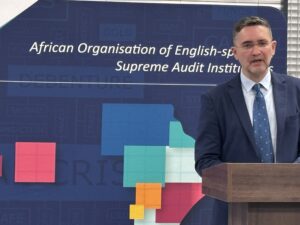
Panel and plenary discussions examined the integrity of climate data, the risks of greenwashing and how auditors can distinguish credible net-zero commitments from misleading claims. Participants also reflected on the ethical challenges auditors face when climate targets come under political, financial or reputational pressure.
A key message emerging from the day was that without integrity, climate commitments lose credibility. Auditors play a vital role in safeguarding the trust on which effective climate action depends.
From Climate Targets to Human Impact
The second day shifted the focus to the social pillar of ESG, highlighting the human dimension of environmental and sustainability policies.
Moithuti Goaletsa of SAI Botswana presented on the social dimensions of ESG, while Dr Patrick Sithole, Chief Executive Officer of EAPASA, delivered the keynote address on auditing the social dimensions of climate action. His presentation challenged participants to move beyond measuring climate targets and disclosures to evaluating their real impact on people and communities.
A panel comprising environmental and sustainability practitioners from across the region explored how climate change affects livelihoods, vulnerable populations and long-term social outcomes. Discussions emphasised that climate action should ultimately be assessed through its tangible outcomes rather than reporting alone.
The day concluded with presentations from SAIs on climate change audits, illustrating how audit work can help bridge the gap between policy intentions and measurable impact.
The central message was clear: auditors help ensure that climate strategies move from intent to impact.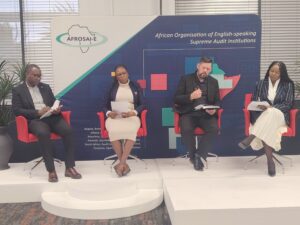
Governance for Sustainable Change
The final day examined the governance pillar of ESG and the importance of accountability, transparency and ethical leadership in achieving sustainability goals.
Participants shared experiences from their respective SAIs before Hon. Machabana Lemphane delivered a keynote address on translating climate data into decision-useful information for parliaments and audit committees. He highlighted the growing expectations placed on oversight institutions to ensure that climate commitments are supported by reliable information and effective governance structures.
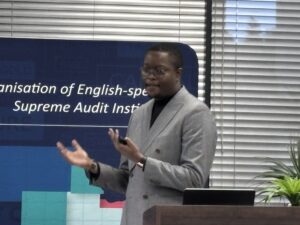 Bhongolwethu Sonti, Africa Programme Manager at the Global Reporting Initiative (GRI), further explored climate change as a governance and accountability issue, encouraging participants to look beyond environmental considerations alone when assessing sustainability performance.
ESG Assurance and the Future of Auditing
Closing the summit, AFROSAI-E Chief Executive Officer Meisie Nkau challenged participants to embrace ESG as a core component of modern auditing.
She stressed that ESG is no longer a sideline issue and that auditors have an important role to play in ensuring that sustainability commitments become a reality rather than remaining aspirational goals.
Nkau emphasised that the journey towards effective ESG assurance requires new skills, methodologies, and mindsets. “ESG is not a stand-alone exercise,” she noted. “It must be integrated into policy, capacity building, skills development and methodologies to ensure it becomes part of everything we do.” She called for stronger collaboration across the region and highlighted AFROSAI-E’s role as a platform for peer-to-peer learning and cooperation.
She encouraged SAIs to invest in training and capacity building, strengthen audit standards and methodologies that reflect the African context, and foster partnerships with academia, oversight structures and the private sector.
Looking Ahead
As AFROSAI-E’s inaugural Environmental and Sustainability Summit concluded, participants left with a renewed understanding of the critical role auditors play in advancing ESG transformation. Across the three pillars of environmental stewardship, social responsibility and good governance, the summit reinforced a common message: effective auditing is essential to building trust, strengthening accountability and ensuring that sustainability commitments translate into meaningful action.
The summit also underscored the value of regional collaboration and knowledge sharing as SAIs continue to adapt to emerging sustainability challenges and opportunities in Africa and beyond.